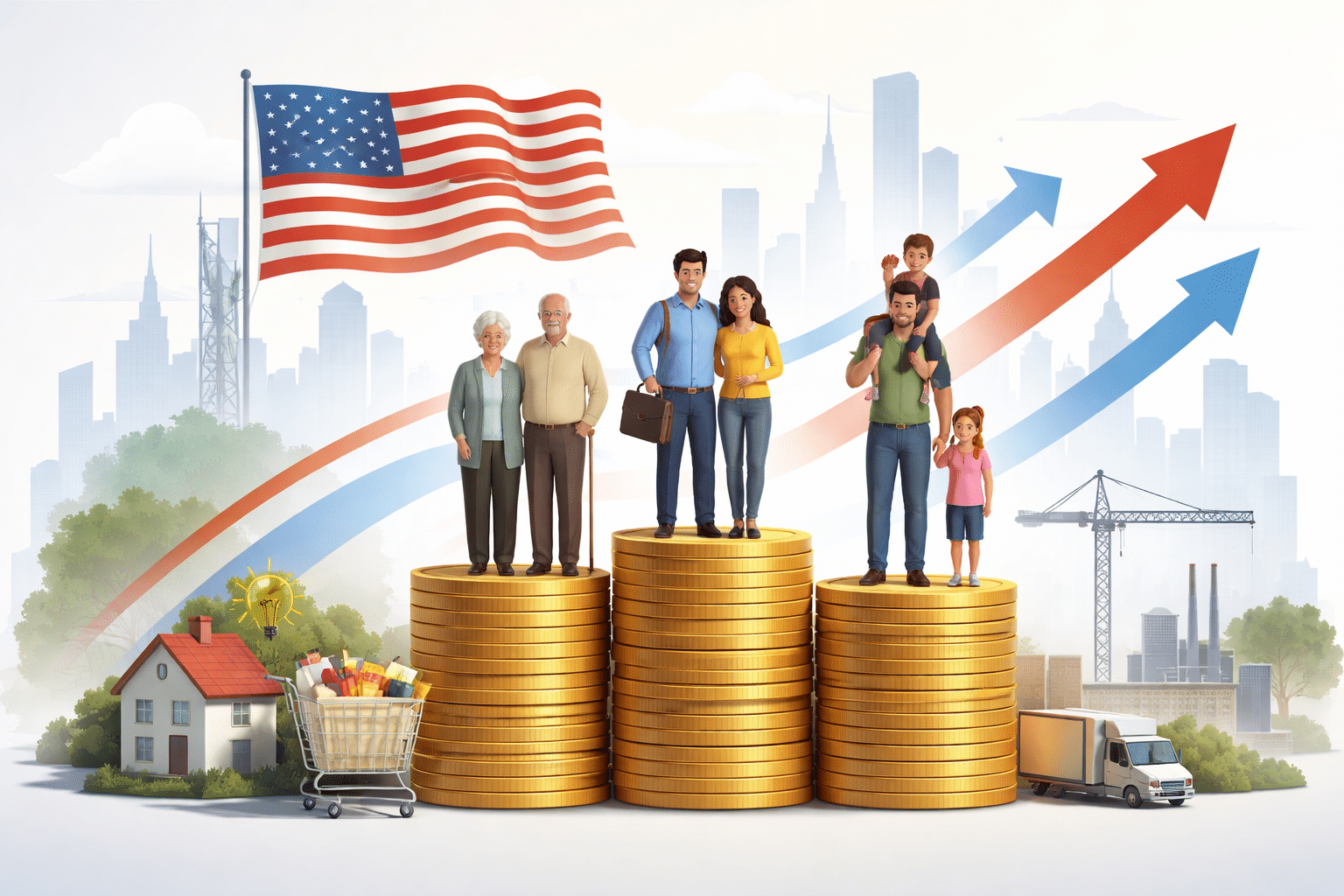
The structure of a nation’s population influences far more than census reports or social statistics. In the United States, changes in age distribution, migration patterns, and family structures play a powerful role in shaping markets, productivity, and long-term prosperity.
Observers who track Economic Trends often look beyond interest rates or stock indexes and instead study population patterns to understand where the country may be heading. When generations grow older, when birth rates slow, or when new groups of workers arrive from abroad, the ripple effects spread through labor markets, housing demand, public spending, and innovation.
Aging population and workforce transformation
One of the most significant developments in recent decades has been the gradual aging of the population. As life expectancy rises and birth rates decline, a larger share of residents are entering retirement age. This transformation affects productivity and labor availability in complex ways.
Many industries are experiencing shortages of experienced workers as large cohorts leave full-time employment. Businesses increasingly respond by investing in automation, extending retirement options, or encouraging older professionals to remain active in part-time roles.
However, the story is not entirely negative. Older consumers also drive substantial demand in healthcare, travel, and specialized services. Entire sectors are expanding to meet the needs of an aging society, creating new opportunities for entrepreneurs and service providers.
Migration and labor market dynamism
Population movement—both international and domestic—continues to shape regional growth. Immigration introduces new workers, skills, and entrepreneurial energy into the economy, often filling critical gaps in agriculture, technology, healthcare, and construction.
At the same time, internal migration between states shifts economic momentum across regions. Areas with strong job creation attract younger workers and families, while others face slower growth as residents relocate. These movements influence housing prices, infrastructure needs, and local tax bases.
New arrivals also contribute to cultural diversity and innovation. Research has frequently shown that immigrant entrepreneurs play a disproportionate role in launching startups, filing patents, and expanding emerging industries.
Changing family structures and consumer behavior
Household composition is also evolving. Americans are marrying later, having fewer children, and living in smaller households than previous generations. These changes alter spending habits and reshape demand across multiple sectors.
Smaller households often prioritize different housing options, favoring apartments or urban living over large suburban homes. Consumer preferences shift toward convenience, digital services, and flexible lifestyles. Businesses must adapt quickly to these changing expectations.
Over time, these population patterns influence investment decisions, workforce participation, and national productivity. Understanding how society itself evolves helps economists interpret the broader direction of the country’s economic landscape—reminding us that numbers alone rarely tell the full story.
👉 Read also: Economic dynamics in the United States shaping long-term strategy